

Skip to content
Majlis of Pursuit
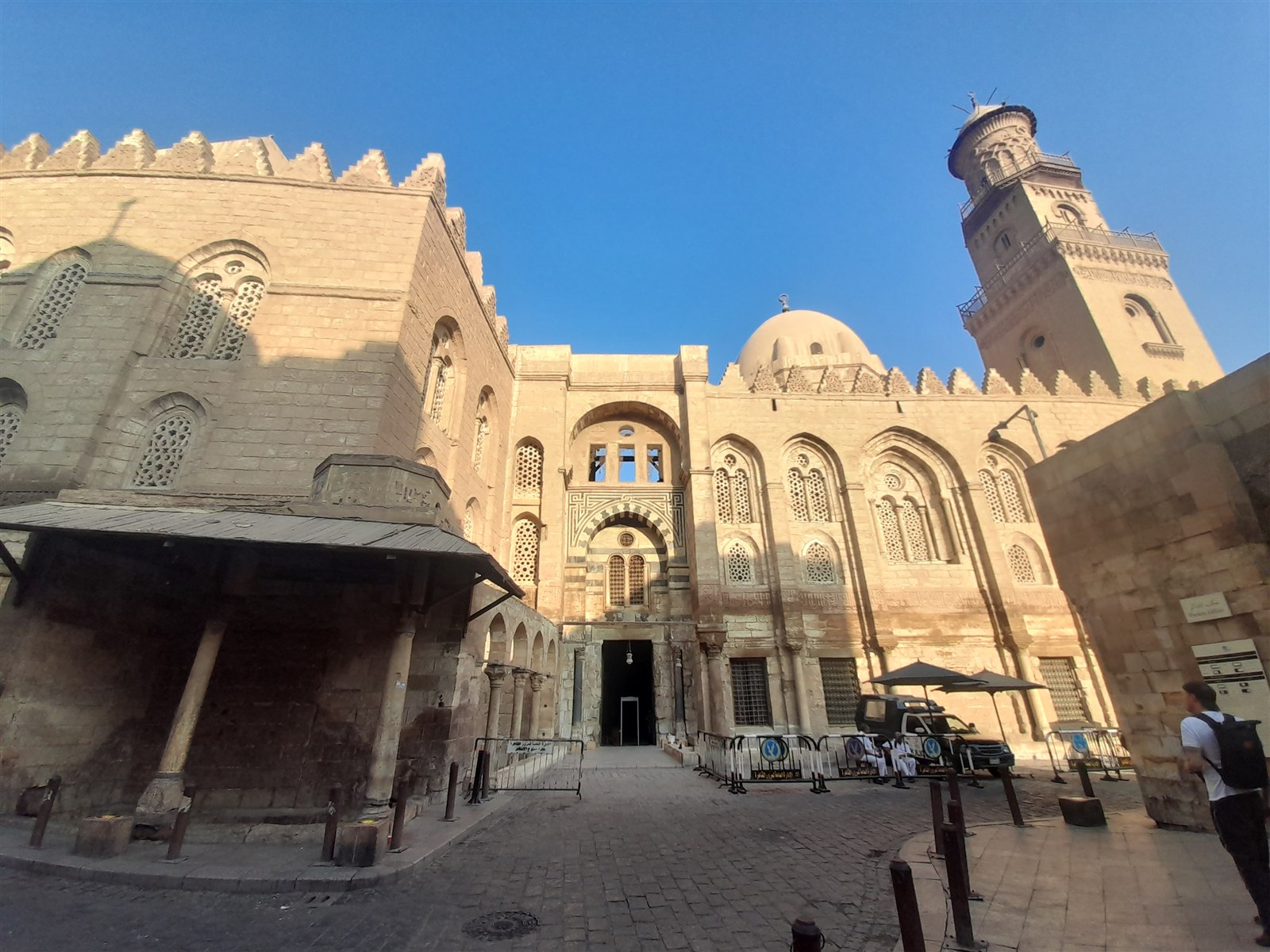
The Mamluk stone facade, dome, and minaret of the Qalawun complex in Cairo
Qalawun complex, Cairo · Marsupium · 2024 · Wikimedia Commons · CC BY 4.0

InvestigationHistory11 min

Who paid for your care in a 13th-century hospital?

Enter a medieval Cairo hospital through its founding documents, meet the physicians who taught at the bedside, and see what made these institutions similar to — and very different from — hospitals today.

Exhibit 01
17%

Exhibit 01

At the gate

Reconstruction based on historical sources. Cairo, the 1280s. The Mamluk sultan Qalāwūn has founded a large hospital — al-Bīmāristān al-Manṣūrī — as part of a complex with a school and his own tomb. Its endowment deed sets out how it will be funded and run.

You are sick, and poor. Will they take you in?

Question

What do you expect to pay?

§Historical finding

The Manṣūrī hospital

Founded by Sultan Qalāwūn in 1284–85, the hospital was funded by a waqf (endowment). Its documents describe staff, wards and provisions. Ragab studies how practice related to these ideals.

1 source
Sources in this experience

  • The Medieval Islamic Hospital: Medicine, Religion, and Charity — Ahmed Ragab, 2015, Cambridge University Press View source
  • Qalawun complex, Cairo (photograph) — Marsupium, 2024, Wikimedia Commons · CC BY 4.0 View source
  • The Origins of the Islamic Hospital: Myth and Reality — Michael W. Dols, 1987, Bulletin of the History of Medicine 61(3): 367–390
  • Medieval Islamic Medicine — Peter E. Pormann & Emilie Savage-Smith, 2007, Edinburgh University Press View source
  • The Birth of the Hospital in the Byzantine Empire — Timothy S. Miller, 1997, Johns Hopkins University Press View source
  • Islamic Culture and the Medical Arts — U.S. National Library of Medicine, 1994 View source
  • Practice versus Theory: Tenth-century Case Histories from the Islamic Middle East — Cristina Álvarez-Millán, 2000, Social History of Medicine 13(2): 293–306
Spotted an error or have a question? Tell us

Keep exploring