

Skip to content
Majlis of Pursuit
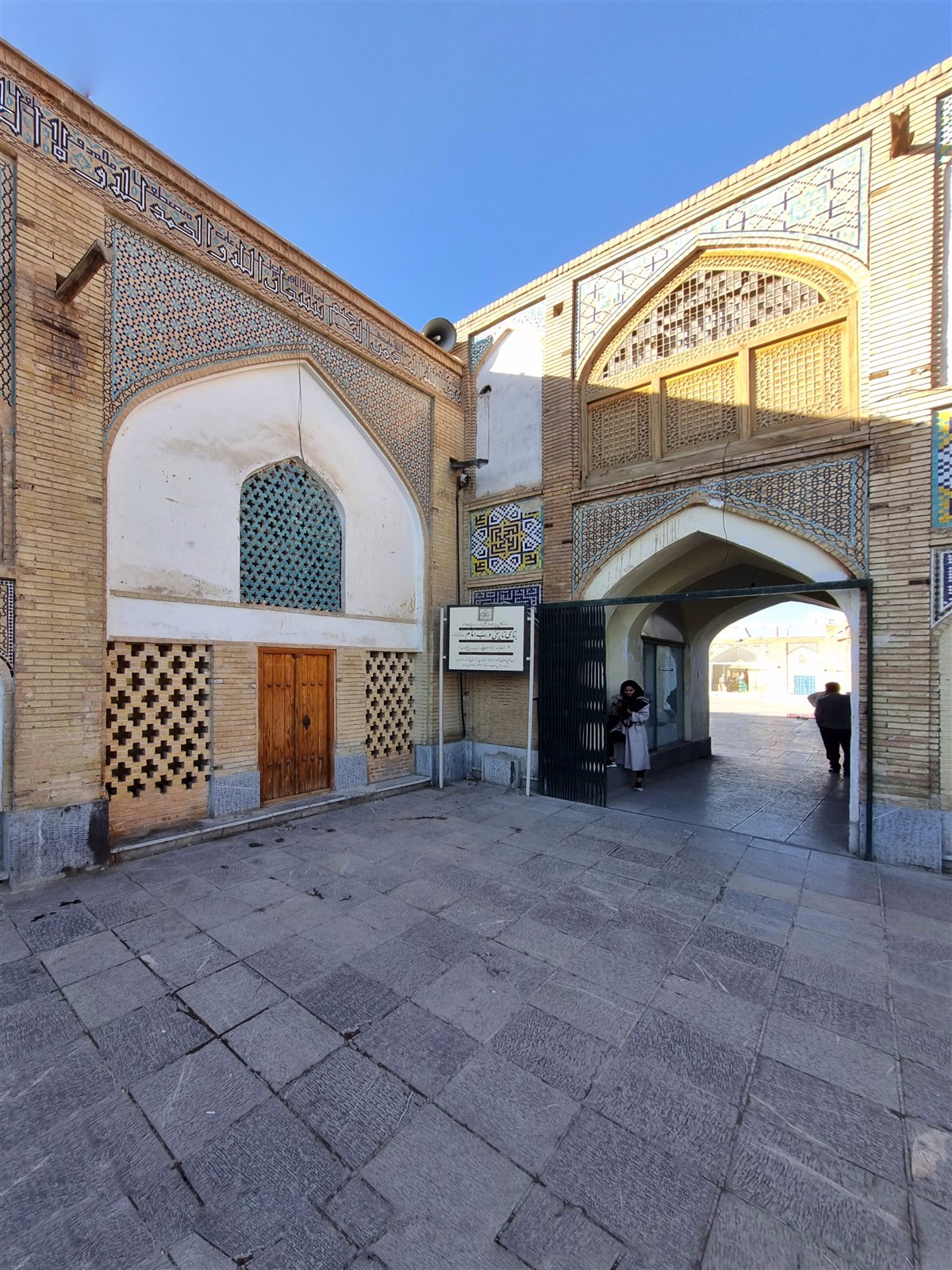
The Darb-e Imam Shrine in Isfahan, with geometric tilework around its arched entrance
Darb-e Imam Shrine, Isfahan · Ahmad3128 · 2023 · Wikimedia Commons · CC BY-SA 4.0 (cropped)

InvestigationScience & mathematics10 min

How do you draw a pattern that never quite repeats?

Build an eight-pointed star with a compass and straightedge, discover a 15th-century pattern scroll, and weigh a modern claim that medieval artisans anticipated advanced mathematics.

Exhibit 01
17%

Exhibit 01

Look again

Walk through the Alhambra in Granada, or the courtyards of Isfahan, and the walls seem to move: stars become flowers, lines weave over and under each other and vanish into the next panel.

These patterns were made by craftsmen, mostly anonymous. How?
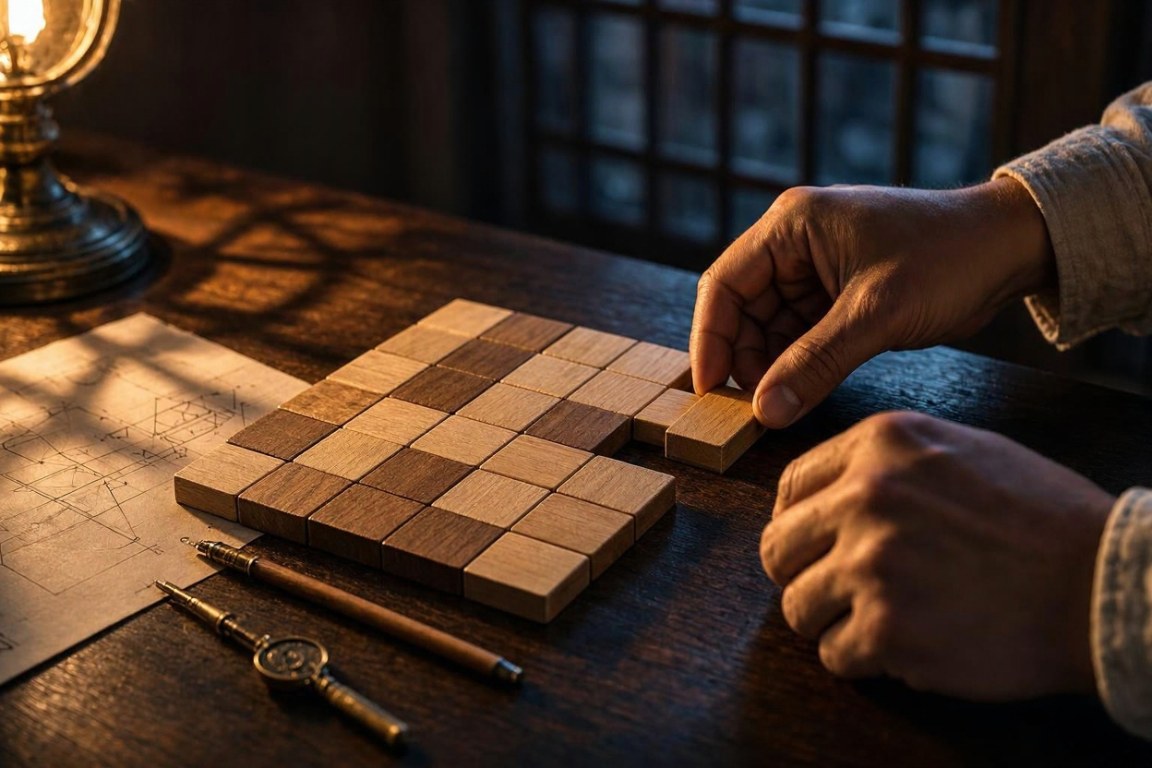
Question

How do you think such patterns were designed?

Sources in this experience

  • Darb-e Imam Shrine, Isfahan (photograph) — Ahmad3128, 2023, Wikimedia Commons · CC BY-SA 4.0 View source
  • Decagonal and Quasi-Crystalline Tilings in Medieval Islamic Architecture — Peter J. Lu & Paul J. Steinhardt, 2007, Science 315(5815): 1106–1110 View source
  • The Topkapı Scroll: Geometry and Ornament in Islamic Architecture — Gülru Necipoğlu, 1995, Getty Center for the History of Art and the Humanities
  • What Symmetry Groups Are Present in the Alhambra? — Branko Grünbaum, 2006, Notices of the American Mathematical Society 53(6): 670–673
  • Islamic Geometric Patterns — Eric Broug, 2008, Thames & Hudson View source
  • Omar Khayyam, Mathematicians, and 'Conversazioni' with Artisans — Alpay Özdural, 1995, Journal of the Society of Architectural Historians 54(1): 54–71
Spotted an error or have a question? Tell us

Keep exploring