

Skip to content
Majlis of Pursuit
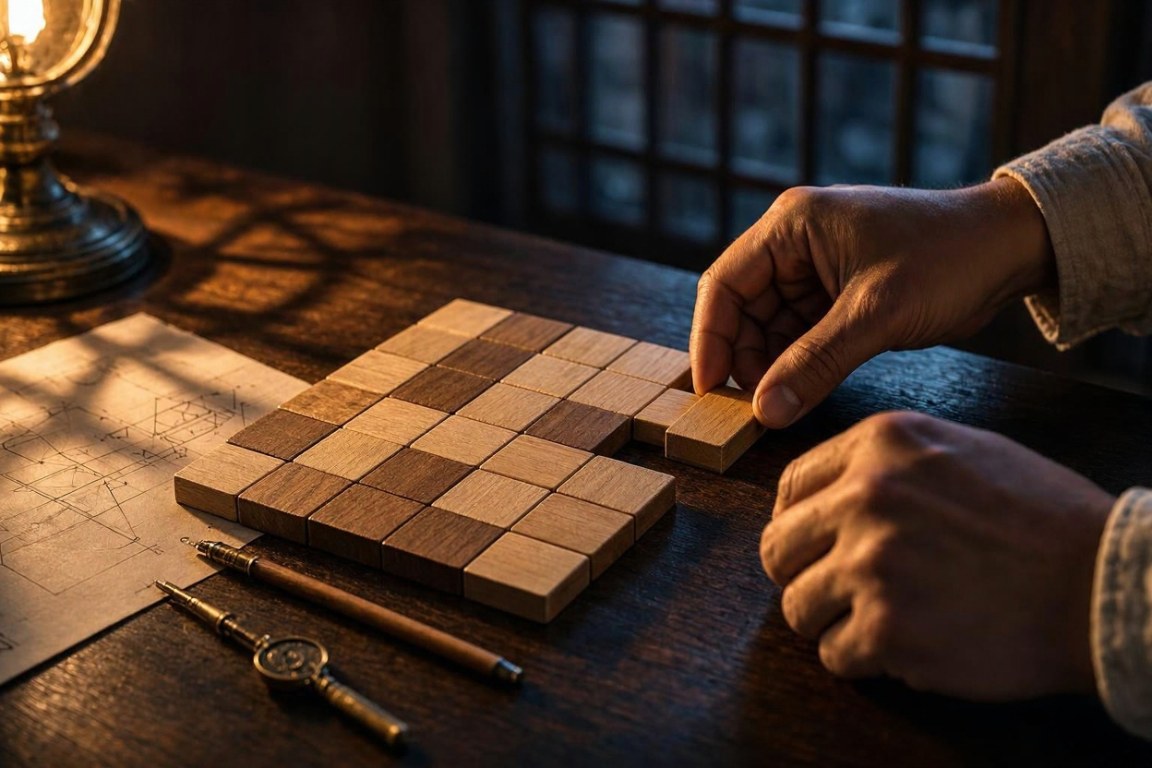
Hands arranging light and dark wooden tiles into a square on a desk beside a brass compass, a reed pen and geometric sketches, lit by lamplight through a lattice window
Illustration

InvestigationScience & mathematics11 min

How do you find a number you don't know?

Solve a 9th-century problem the way it was first solved — with squares and rectangles — and trace how a book from Baghdad gave algebra its name.

Exhibit 01
17%

Exhibit 01

A puzzle with a missing number

Here is a problem in the form al-Khwārizmī used: "A square and ten of its roots equal thirty-nine."

In modern symbols: x² + 10x = 39. But in 9th-century Baghdad there were no symbols — the whole problem was written in words.
Question

Can you guess the number?

Sources in this experience

  • Al-Khwārizmī: The Beginnings of Algebra — Roshdi Rashed, 2009, Saqi Books View source
  • Lengths, Widths, Surfaces: A Portrait of Old Babylonian Algebra and Its Kin — Jens Høyrup, 2002, Springer View source
  • A History of Mathematics: An Introduction (3rd ed.) — Victor J. Katz, 2009, Addison-Wesley
  • Abu Ja'far Muhammad ibn Musa Al-Khwarizmi — J. J. O'Connor & E. F. Robertson, MacTutor History of Mathematics View source
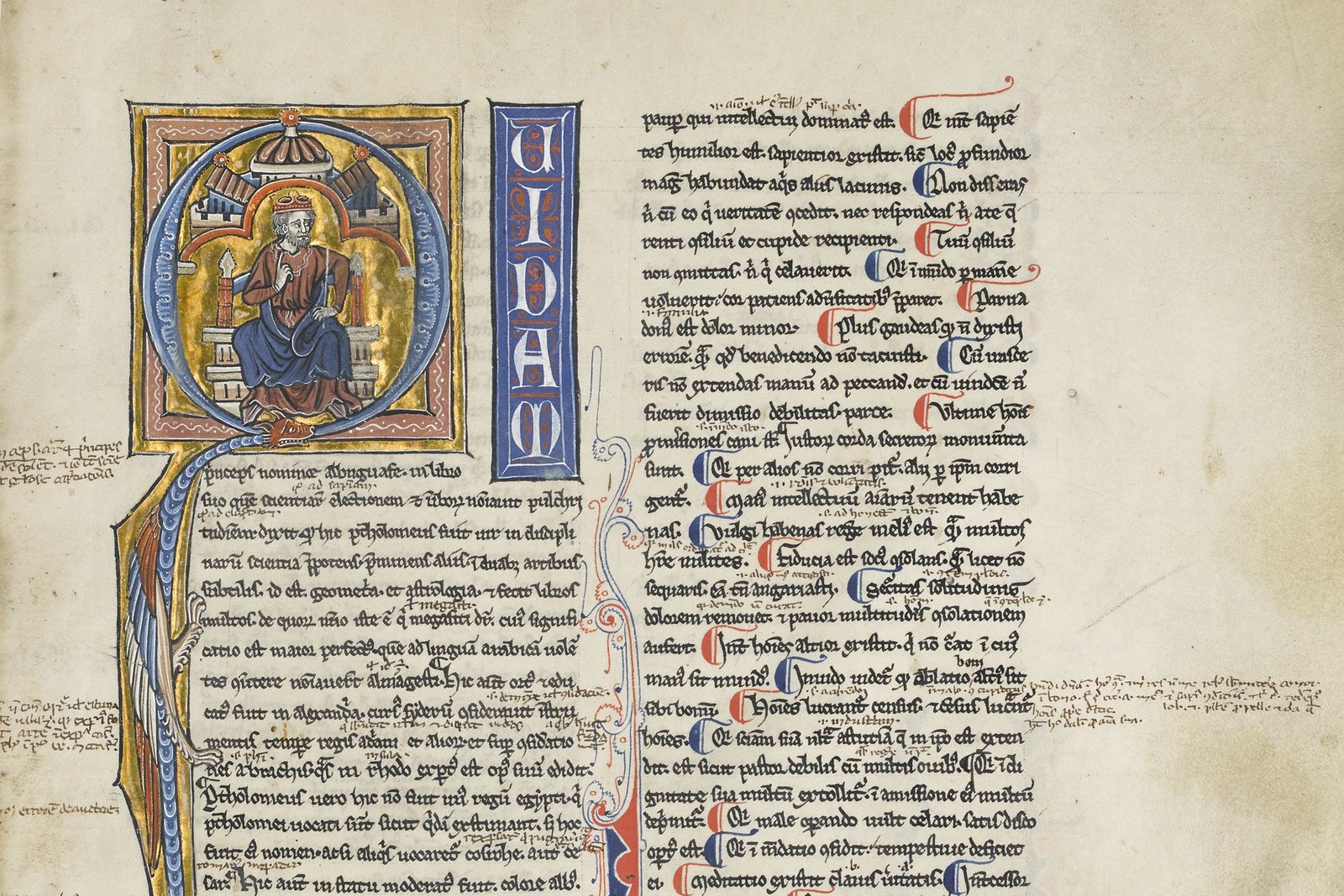
  • Kitāb al-mukhtaṣar fī ḥisāb al-jabr wa-al-muqābala (copy dated 1342) — Bodleian Libraries, University of Oxford
Spotted an error or have a question? Tell us

Keep exploring